
How Dating Apps Rank Profile Photos
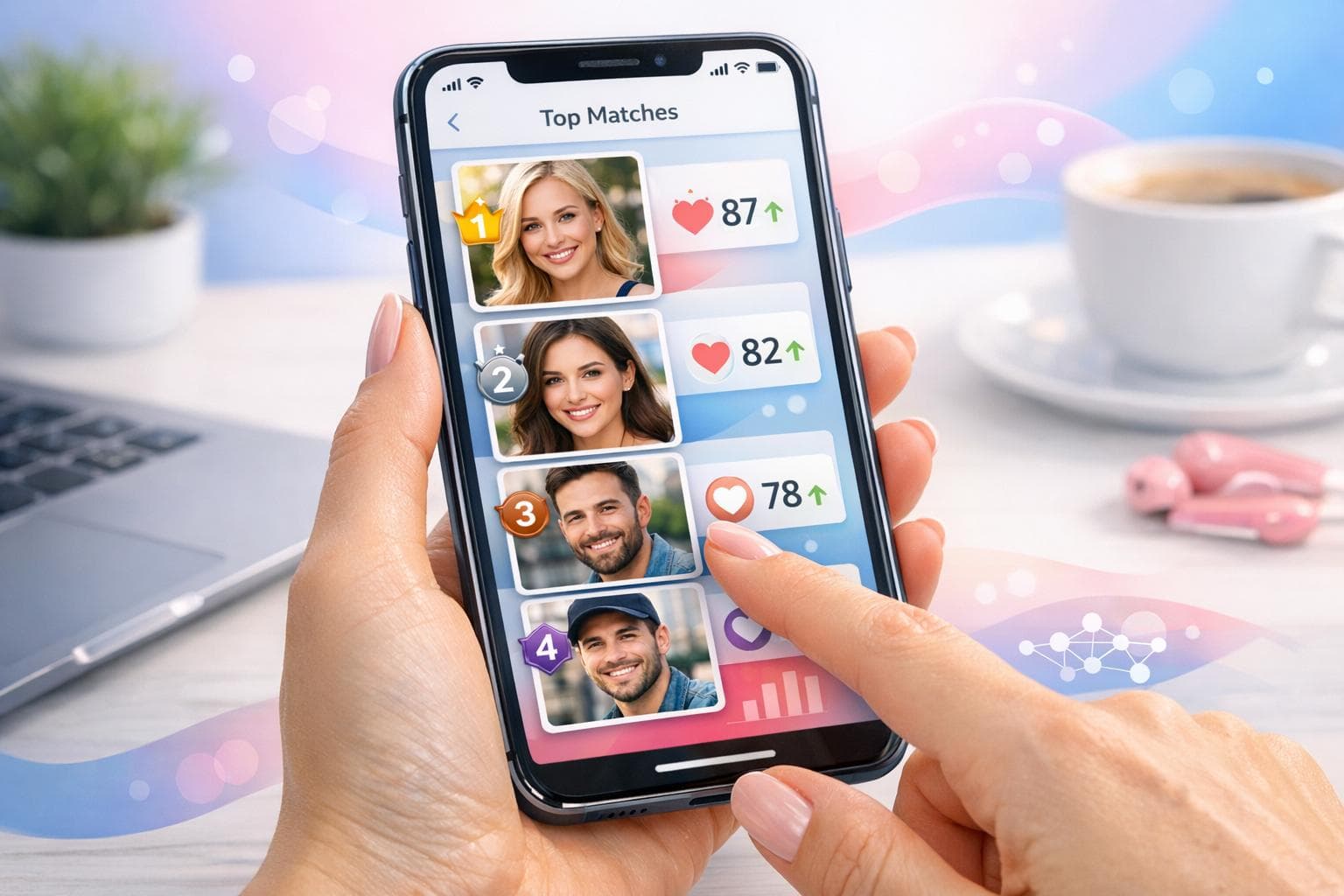
Dating apps like Tinder, Bumble, and Hinge use algorithms to rank your profile photos based on quality, engagement, and user preferences. Your photos are analyzed for clarity, lighting, and emotional expression, while user interactions like swipes and messages shape your visibility. Smiling, high-quality images, and consistent photo sets improve your chances of appearing in more feeds. Apps also use AI to evaluate settings (e.g., beaches, gyms) and match your style to user preferences. Updating your photos every 1–3 months and testing their performance can help maintain your profile's ranking and boost matches.
Do Dating Apps Secretly Rank You by “Hotness”? 😳 The Truth About Algorithms #datingover50
How Dating Apps Analyze Profile Photos
How Dating App Algorithms Rank Your Profile Photos
Dating apps do more than simply showcase your photos - they actively evaluate them using advanced algorithms and user interaction data. This analysis determines how visible and appealing your profile is to others. Let’s break down how these platforms assess your pictures and why it matters.
What Algorithms Look for in Photos
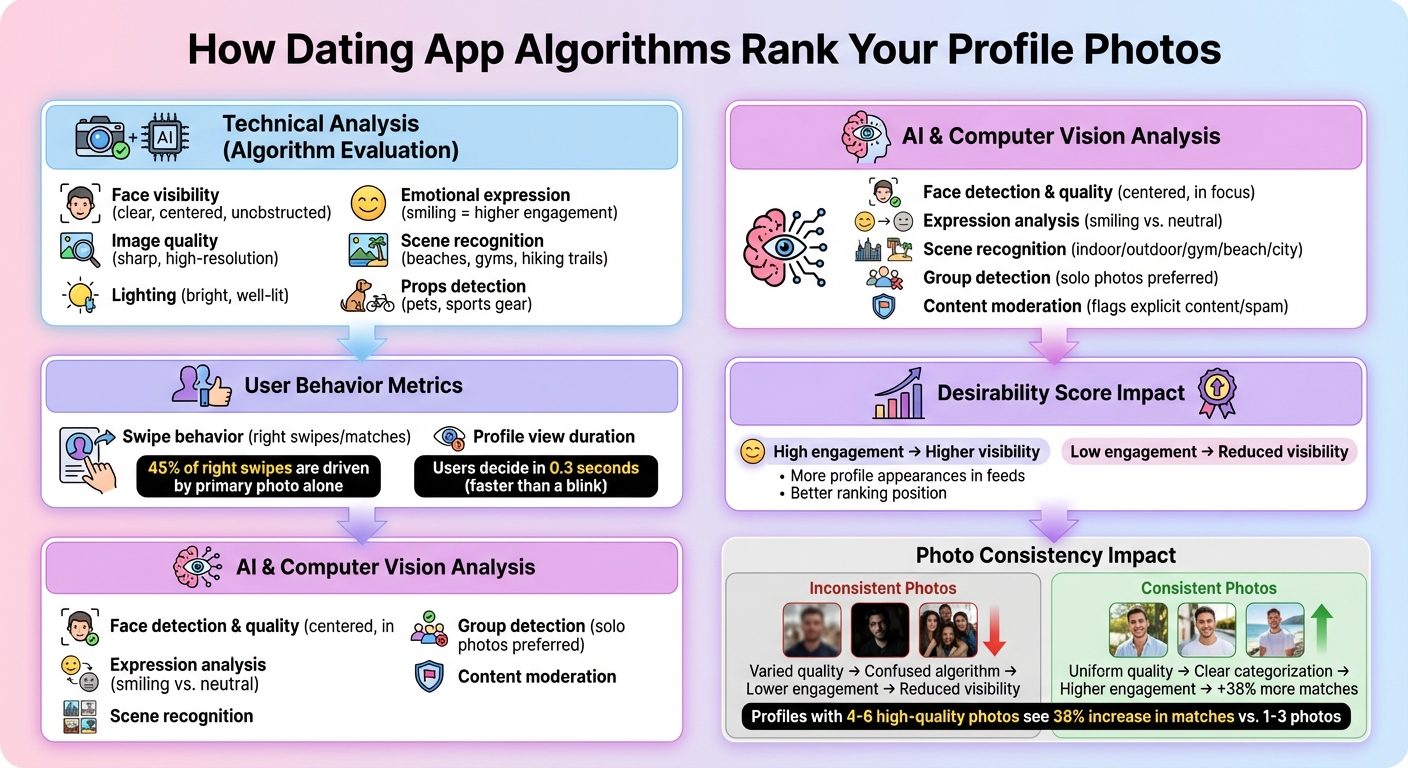
When it comes to your photos, dating apps rely on algorithms to evaluate several key factors:
- Face visibility: Is your face clear, centered, and unobstructed? Photos with sunglasses, heavy filters, or other distractions tend to rank lower.
- Image quality: Sharp, high-resolution images perform better than blurry or grainy ones.
- Lighting: Bright, well-lit photos where your face is easy to see are more likely to get noticed.
But it’s not just about technical quality. Algorithms also assess emotional expression - friendly, open smiles often lead to higher engagement. They even analyze the context of your photos. For instance, apps can recognize settings like beaches, gyms, or hiking trails, as well as props like pets or sports gear. If users in your area tend to swipe right on outdoorsy images, your hiking photo might get a boost in visibility.
How User Behavior Shapes Rankings
Your photo’s performance doesn’t stop with technical analysis. Apps track how other users interact with your pictures to refine rankings further. They measure:
- Swipe behavior: How often your photos lead to right swipes or matches.
- Engagement: Whether matches result in conversations and how long users spend viewing your profile.
These interactions contribute to a desirability score that influences how often your profile appears in others’ feeds. For example, if people consistently swipe right on your primary photo, the app will prioritize it and show your profile to more users. On the flip side, if one photo consistently leads to left swipes, it could hurt your overall visibility. Data suggests that your primary photo alone can drive up to 45% of right swipes, and users make decisions in just 0.3 seconds - quicker than the blink of an eye[4].
The Role of AI and Computer Vision
Modern dating apps use AI and computer vision to take photo evaluation to the next level. These technologies analyze your pictures in incredible detail. Here’s how it works:
- Face detection and quality: AI ensures your face is centered, in focus, and large enough to stand out.
- Expression analysis: Smiling faces generally get better responses than neutral or serious expressions.
- Scene recognition: The system identifies whether you’re indoors, outdoors, at the gym, on a beach, or in a city.
- Group detection: It checks if you’re alone or in a crowd, as solo photos are often preferred.
These systems combine visual data with historical engagement trends to predict how well a photo will perform. For instance, if smiling beach selfies are popular in your area, the algorithm will favor similar images. AI also flags potential issues, like explicit content or spam, ensuring profiles meet platform guidelines.
For users, this means your photos aren’t just being uploaded - they’re being actively scored. Choosing images that are sharp, bright, and easy for AI to interpret (e.g., clear faces, minimal filters, and recognizable settings) can significantly improve your profile’s ranking and visibility.
Why Photo Consistency Matters
Keeping your photo set consistent sends a strong message to dating app algorithms - and to potential matches.
Inconsistency Confuses Both Algorithms and Users
When your photos vary wildly in quality or style, it creates confusion for both the app's algorithms and the people viewing your profile. For example, imagine your first photo is a polished, well-lit headshot, but the next is a blurry selfie. The app's AI might struggle to categorize your profile, and users may lose interest. A mismatch in photo quality can lead to fewer right swipes. Someone might be intrigued by your first photo but lose interest when the rest don’t match that standard. This drop in engagement - like fewer swipes, shorter profile views, and fewer messages - signals to the algorithm that your profile isn’t as appealing. The result? Your visibility on the app takes a hit.
The Positive Impact of Consistency
On the flip side, sticking to a consistent, high-quality photo set can create a ripple effect that works in your favor. When all your photos align in quality and style, it’s easier for viewers to recognize and connect with you. This builds trust and encourages more engagement. Higher-quality photos lead to more right swipes, which boost your desirability score. The app then rewards you by showing your profile more frequently and placing it higher in others’ feeds. For example, profiles with 4–6 high-quality, varied photos see a 38% increase in matches compared to those with just 1–3 images [3]. In short, consistency not only gets you noticed but helps you stay at the top of the list. Up next, we’ll dive into strategies to ensure your photo set stays cohesive and engaging.
sbb-itb-06ba92c
How to Build a Consistent Photo Set
Now that you know why consistency is key, let’s dive into how to create a photo set that works with dating app algorithms instead of against them.
Key Principles for Photo Consistency
Start with 4–6 high-quality photos - this range can increase your matches by 38% compared to profiles with only 1–3 images [3]. Each photo should have sharp resolution, balanced lighting, and a clear focus on your face. Your first photo is the most important, so make it a standout - a smiling, clear headshot is a great choice.
Keep a consistent theme throughout your photo set. For example, if your first picture has an outdoor vibe with natural lighting, stick to that style in the rest of your photos. Dating apps use image recognition to identify patterns in your pictures. A cohesive style, like "adventurous outdoors" or "urban chic", helps the algorithm pair you with users who share similar interests [5]. Include a mix of shots - like a headshot, full-body photo, activity-based image, and a social setting - but ensure they all feel like they belong to the same story. The goal is to show different facets of your personality while maintaining visual harmony.
Using AI Tools for Photo Optimization
Professional studio sessions for 4–6 photos can cost around $300 and take hours of your time. AI tools have made this process much easier and more affordable. For instance, Dating Photo AI allows you to upload 5–10 selfies and generates dozens of polished images that keep your true likeness intact while presenting you in flattering, consistent settings.
These tools enhance your photos by improving clarity, brightness, and facial focus - factors that dating app algorithms prioritize. Over 53,000 singles have already used this method to refresh their profiles [1]. When selecting your final images, aim for variety in poses and settings while keeping a unified aesthetic. Regular updates paired with consistent quality can help keep your profile in the algorithm’s good graces.
When to Update Your Photo Set
To keep your profile fresh and engaging, update your photo set every 1–3 months. Dating apps monitor engagement levels, and using outdated photos can lead to fewer matches over time. If you notice a drop in impressions or matches, it’s time for a refresh.
Significant changes in your appearance - like a new haircut, seasonal shifts, or other noticeable updates - also call for a photo overhaul. Replace your entire set to maintain the cohesive look. Apps like Bumble even rotate your top three photos to test performance [2], so when you upload new pictures, monitor your results over 1–2 weeks to identify which ones resonate most with potential matches.
Measuring and Improving Photo Performance
Once you've curated a consistent set of photos, the next step is figuring out how well they're working. Regularly assessing their performance helps keep your profile in top shape.
Tracking In-App Metrics for Feedback
Start by keeping an eye on your app's built-in metrics. One key indicator is match volume - the total number of matches you get each week. If you notice a spike after swapping out your photos, it's a good sign that your new images are resonating better.
But don't stop at quantity. Look at match quality and conversation engagement too. Are your matches reaching out first? Do they share your interests? Photos that reflect your personality often lead to more meaningful interactions. If you're getting more matches but fewer meaningful conversations, it might mean your photos are attracting the wrong crowd.
For apps without detailed analytics, you can track things manually. Log your weekly matches, response rates (how many matches reply), and the quality of conversations (how often they lead to phone numbers or dates). Test each photo set for 3–7 days to gather enough data to spot trends and rule out random changes.
Use this data to decide when it’s time for a photo refresh.
Updating Photos Based on Results
If your metrics dip consistently for 1–2 weeks, it’s time to shake things up. Start by updating one photo at a time, focusing on your primary image first - most users make their decision in under 3 seconds [2]. Test each new setup for at least a week, then compare the results to see what works best.
Tools like Dating Photo AI make it easy to experiment with different photo styles. Instead of spending money on a professional photoshoot, you can upload 5–10 selfies and generate polished images in various settings. This allows you to test whether outdoor shots, professional looks, or casual vibes click with your audience. Plus, it keeps your photos consistent in quality and style, which algorithms tend to favor. Over 53,328 singles have already used this method to revamp their profiles and get better results [1].
When updating your photos, stick to a cohesive style to maintain a consistent narrative across your profile. A unified look helps make a stronger impression while still allowing room for experimentation.
Conclusion
Dating apps rely on computer vision and user behavior to rank your photos. Their algorithms evaluate factors like photo quality, clarity, and composition while monitoring swipes, views, and messages to determine your visibility score. With nearly 80% of users making a decision in under 3 seconds based on your first photo, every image in your profile needs to make an impact[2].
Consistency plays a big role in boosting engagement. Uniform lighting, quality, and style create a cohesive visual story that appeals to both viewers and algorithms. On the other hand, mismatched or inconsistent images can confuse viewers, lower engagement, and signal poor quality to the algorithm, ultimately hurting your ranking[5].
In the past, achieving this level of consistency often meant expensive professional photoshoots. Now, technology has made it much easier. Dating Photo AI can transform 5–10 casual selfies into a polished, cohesive photo set in just seconds. Whether you’re aiming for outdoor, professional, or casual settings, this tool helps create high-quality images that maintain a consistent standard. Over 53,328 singles have already used this approach to build profiles that not only look great but also perform better with dating app algorithms[1].
Once you have a consistent photo set, the next step is to treat your profile as an experiment. Regularly test different styles, monitor your match rate, and tweak your photos as needed - all without the hassle of another photoshoot. Upload your strong, cohesive set, stay active for 1–2 weeks to let the algorithm collect fresh data, and track how your metrics evolve[5]. By aligning your profile with clear, engaging visuals, you’ll be working with the algorithm to maximize your results.
FAQs
How often should I update my dating profile photos to stay relevant?
Updating your dating profile photos every few months is a smart way to keep things engaging and improve your profile’s visibility. Fresh photos ensure your profile reflects your current look, making it more relatable and appealing.
Focus on using high-quality images that highlight your personality and style. Whether it’s a candid shot that shows your fun side or a polished photo for a more refined vibe, consistency in quality matters. Plus, dating app algorithms often favor profiles with updated content, which could give your ranking a helpful nudge.
What kind of photos do dating apps prefer for better rankings?
When it comes to dating apps, clear, high-quality photos are a must. These should highlight not just your appearance but also your personality. Think well-lit headshots, natural smiles, and pictures that show off your personal style.
Candid shots or photos that capture your hobbies and interests tend to stand out. They make you seem more approachable and relatable. On the flip side, steer clear of overly edited or mismatched images - they can make you seem less trustworthy and might hurt your chances of meaningful connections.
How can AI improve my dating profile photos?
AI tools, such as those provided by Dating Photo AI, can help elevate your dating profile photos by refining their quality and style. These tools leverage cutting-edge technology to enhance your best features while ensuring the images still reflect your unique personality.
With AI fine-tuning your photos, your profile can stand out, drawing more attention and increasing the chances of meaningful connections and engaging conversations.